Sunday, 16 March 2014

Floods between Bridgwater and Taunton

In Exeter for Hamish's stag weekend and although I had to get a connecting bus down on Friday, because the train line was still closed due to flooding, it was opened again for my train back on Sunday. For several miles the line ran along a raised strip of ground through a flooded landscape, with lines of trees the only guide to immersed field edges and raised meadow islands. The train passengers all looking out together at this temporary inland archipelago, snapping away on smart phones at a beautiful, unfamiliar and temporary local landscape.


Monday, 24 February 2014

Early Birdsong

A couple of weeks ago I heard the first greenfinches wheezing their 'zweeeee' call, and about a week ago every local chaffinch seemed to find its voice at the same time, and cycling to work this morning we heard the faint trickle of skylark song dropping on the fields below...there's no going back now, is there?

Sunday, 23 February 2014

First Somerset Frogspawn 2014

A stormy, windy night and yet this morning it doesn't seem to have put off the amphibians - the first frogspawn of 2014. (* See previous first spawning dates in the same pond)

23rd February 2014
21st January 2013
19th February 2012
11th February 2011


Winter wears a dream of smiling spring...

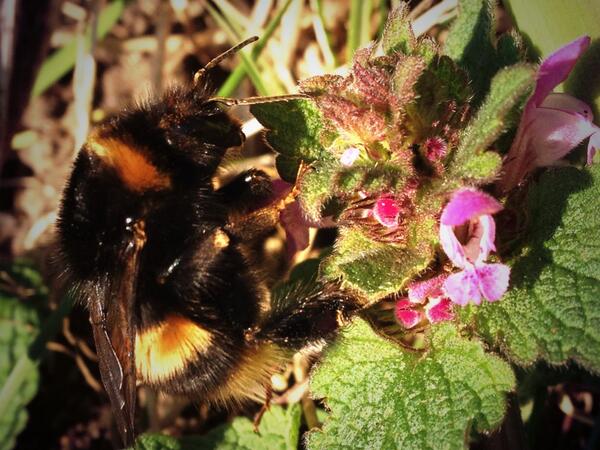
It has been a relatively benign winter in Norfolk, the tidal surge in December aside. And now it feels like spring is well on its way. With mild days and sunshine I've been expecting to see the first emergent Bumblebee queens for a week or so and finally saw one on Saturday (22nd), which is almost the exact date that Coleridge wrote this poem which is pretty spot on:

Work without Hope
By Samuel Taylor Coleridge
Lines Composed 21st February 1825

All Nature seems at work. Slugs leave their lair—
The bees are stirring—birds are on the wing—
And Winter slumbering in the open air,
Wears on his smiling face a dream of Spring!
And I the while, the sole unbusy thing,
Nor honey make, nor pair, nor build, nor sing.

Yet well I ken the banks where amaranths blow,
Have traced the fount whence streams of nectar flow.
Bloom, O ye amaranths! bloom for whom ye may,
For me ye bloom not! Glide, rich streams, away!
With lips unbrightened, wreathless brow, I stroll:
And would you learn the spells that drowse my soul?
Work without Hope draws nectar in a sieve,
And Hope without an object cannot live.

It was this lovely, fat Bombus terrestris, a very common species which is often the first to emerge, and in some southern counties is now not even hibernating. The newly emergent queens will forage for a few days, build up their strength and look for suitable locations (such as old vole holes) to establish a nest.

As a point of comparison, in 2013 I didn't see any  Bumblebees until 7th April, but in 2012 it was 28th February. Foraging opportunities are pretty good this year, with lots of dead nettles, crocuses and even early daffodils.

Norfolk for Half Term - Late winter

Visiting Strumpshaw and Claxton in Norfolk over half term, surprisingly mild with a respite in the endless rain and still no sign of snow with chances now receding. We didn't manage this time to visit the coast or bird reserves but did walk up over the beautiful Claxton fields on three separate evenings. There are clearly signs of spring with the hedgerows just beginning to sprout leaves, the rabbit runs showing signs of excavation, the sounds of the first skylarks and chaffinch, a circling pair of buzzards, a moth at the kitchen window in the evening and the daffodils and snowdrops.


Back in Somerset now  - and looking in my pond in Ashcott I am surprised to note that although there seems to be plenty of ongoing frog action there is still no frogspawn ?

Tuesday, 18 February 2014

Buckingham Rooks


Went out to watch the massing evening rooks at Buckingham. Parked on the Carrs Rd to try to get a long exposure photograph of the roosting birds, looking West towards the lighter sky, but sat in the growing darkness with my youngest son with no rooks in sight, or any to be heard.

Close to 6pm and after a while I decided that we had missed the evening spectacle, slightly out of kilter now as we can only visit during school holidays. Drove along towards the station turning towards the old WW2 pill box and became aware of huge black lines of rooks sitting still and ready in the ploughed fields on the right. Suddenly they were all lifting into the sky, as if possibly triggered by my headlights and intrusion, and the massed cawing and sweeping spectacle of huge numbers of birds filled the almost dark sky around us. Driving down to the old manned railway crossing, the scene of many childhood walks and eel fishing adventures and with my son pointing out of the open windows, we passed two walkers staring upward into the feathered maelstrom as everyone does, slightly awed by this daily event. Parked as the birds above drifted on-masse towards the woods, the Carrs themselves homing between 30 and 60,000 birds (*according to authority Mark Cocker in his Guardian newspaper natural history column). Then onto the empty rail platform to assemble my tripod hastily and to take a couple of 30 second exposure photographs of the tree-line to the East, whilst keeping an eye on my 5 year old assistant. The rooks were all roosting in the closing darkness, pouring fluidly into the branches and, as evidenced by the above photograph, the spectacle is completely absent from my image as the movement of the birds themselves removes them from the long exposure. Almost completely dark as we walked back to the van, the rich conversation of cawing rooks still emanating from the now still woods.

Saturday, 15 February 2014

Buzzard Hunting Worms

I stopped by the road behind Shapwick to watch a buzzard eating worms in the field. I often see buzzards eating worms and sometimes there are groups of 5 or 6 in a single field, stalking the damp grass looking for unwary worms which they then pounce on and tug out of the ground. These opportunistic hunters are so much part of this landscape with their recognisable wing shape as they glide low over the hedges, sit hunched on tree branches, tumble as being mobbed by crows and circle high in the sky above, looking up alerted by their beautiful distinctive calls.


 * I noticed that again there are more buzzards to be seen in Norfolk with the pair from last summer still circling above the woodlands behind Claxton. A very rare sight when I was a child.