Beautiful day at Dunster Castle - The children running through the blue bells in the surrounding woodland.
A collection of writing, images and sounds inspired by natural history, by Somerset artist Duncan Cameron and Norfolk musician Adam Clark
Sunday, 27 April 2014
Saturday, 12 April 2014
Old Tree with Bricks.
Walking through Taunton town centre near to the river. Encountered this wonderful old tree and, as I am sure many children have before us, my children clambered onto it's huge lower branches. The ancient trunk has clearly absorbed a brick wall in it's long past, a slow growing amoeba powering on as our lives flit past. Trees and plants amaze me with their deceptive strength as buddleia push apart the walls of abandoned buildings and saplings climb up through pavements and so trees explode and absorb brick walls. If ever we leave this earth, for all of our accomplishments and constructions, the natural world will reclaim the surface of this planet in no time at all.
Swallows return from Africa.
I saw my first swallows sitting in a pair on the telephone cables on the Taunton road as we drove back from Saturday morning football. Tired after their long flight and looking resplendent with their distinctive tails. I conversation it turns out that a pair had returned to roost in a friend's horse barn earlier in the week and within a few days I was seeing them on fences and lines quite regularly. They were appearing in Norfolk as we arrived in Norfolk for Adam's party, perhaps making their way across the country having originally arrived in the south and West slightly earlier having flown up from over the continent.
Sunday, 16 March 2014
Floods between Bridgwater and Taunton
In Exeter for Hamish's stag weekend and although I had to get a connecting bus down on Friday, because the train line was still closed due to flooding, it was opened again for my train back on Sunday. For several miles the line ran along a raised strip of ground through a flooded landscape, with lines of trees the only guide to immersed field edges and raised meadow islands. The train passengers all looking out together at this temporary inland archipelago, snapping away on smart phones at a beautiful, unfamiliar and temporary local landscape.
Monday, 24 February 2014
Early Birdsong
A couple of weeks ago I heard the first greenfinches wheezing their 'zweeeee' call, and about a week ago every local chaffinch seemed to find its voice at the same time, and cycling to work this morning we heard the faint trickle of skylark song dropping on the fields below...there's no going back now, is there?
Sunday, 23 February 2014
First Somerset Frogspawn 2014
A stormy, windy night and yet this morning it doesn't seem to have put off the amphibians - the first frogspawn of 2014. (* See previous first spawning dates in the same pond)
23rd February 2014
21st January 2013
19th February 2012
11th February 2011
Winter wears a dream of smiling spring...
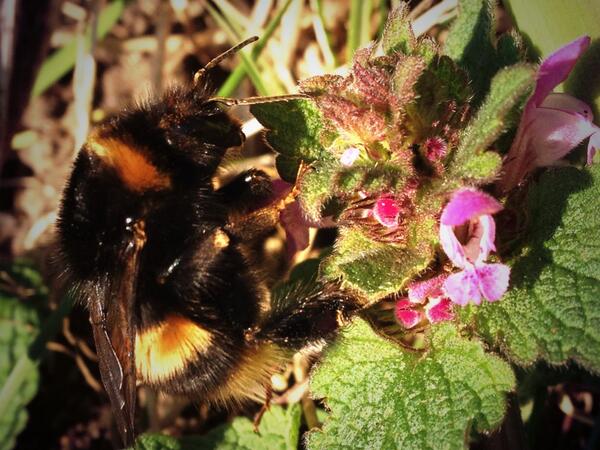
It has been a relatively benign winter in Norfolk, the tidal surge in December aside. And now it feels like spring is well on its way. With mild days and sunshine I've been expecting to see the first emergent Bumblebee queens for a week or so and finally saw one on Saturday (22nd), which is almost the exact date that Coleridge wrote this poem which is pretty spot on:
Work without
Hope
By Samuel
Taylor Coleridge
Lines Composed 21st February 1825
All Nature
seems at work. Slugs leave their lair—
The bees are
stirring—birds are on the wing—
And Winter
slumbering in the open air,
Wears on his
smiling face a dream of Spring!
And I the
while, the sole unbusy thing,
Nor honey
make, nor pair, nor build, nor sing.
Yet well I
ken the banks where amaranths blow,
Have traced
the fount whence streams of nectar flow.
Bloom, O ye
amaranths! bloom for whom ye may,
For me ye
bloom not! Glide, rich streams, away!
With lips
unbrightened, wreathless brow, I stroll:
And would
you learn the spells that drowse my soul?
Work without
Hope draws nectar in a sieve,
And Hope
without an object cannot live.
It was this lovely, fat Bombus terrestris, a very common species which is often the first to emerge, and in some southern counties is now not even hibernating. The newly emergent queens will forage for a few days, build up their strength and look for suitable locations (such as old vole holes) to establish a nest.
As a point of comparison, in 2013 I didn't see any Bumblebees until 7th April, but in 2012 it was 28th February. Foraging opportunities are pretty good this year, with lots of dead nettles, crocuses and even early daffodils.
Subscribe to:
Posts (Atom)